

Ferrari’s first all-electric supercar is rewriting the rules of performance—but not everyone is convinced the future should look this way.
Ferrari has officially stepped into unfamiliar territory, and the automotive world is paying close attention.
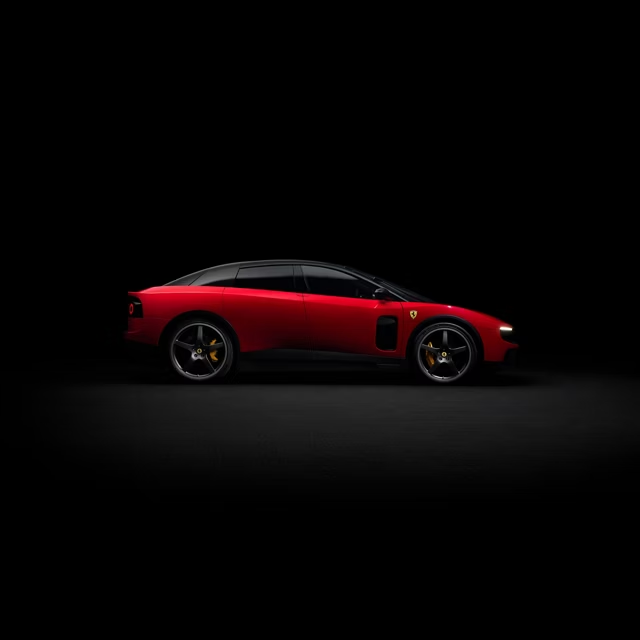
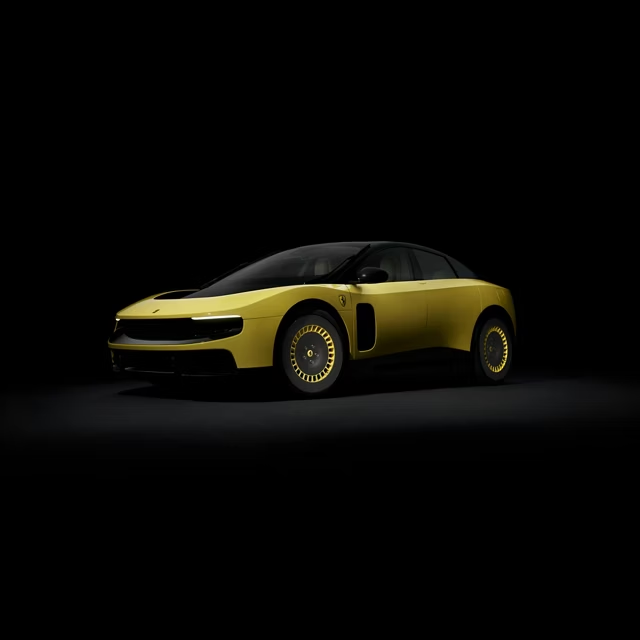
The legendary Italian marque recently unveiled the Luce, its first fully electric production vehicle, marking one of the most significant transformations in the company’s history. Packed with cutting-edge technology, radical design solutions, and breathtaking performance figures, the Luce is intended to prove that electrification and Ferrari’s racing-inspired DNA can coexist.
Yet instead of universal praise, the launch has ignited one of the most heated debates the supercar industry has seen in years.
From passionate Ferrari loyalists to investors and rival automakers, reactions have ranged from excitement to outright skepticism. The controversy has become so pronounced that Lamborghini’s leadership has publicly defended its own decision to walk away from pure-electric supercars.
Ferrari’s Most Ambitious EV Yet
At its core, the Luce is unlike anything Ferrari has ever built.
The electric grand tourer is powered by four independent electric motors—one at each wheel—producing a combined output of 1,050 horsepower-equivalent metric units. Ferrari claims the vehicle can sprint from 0 to 100 km/h in just 2.5 seconds and continue to a top speed of 310 km/h.
A massive 122 kWh battery pack operating on an advanced 800-volt electrical architecture provides an estimated driving range of approximately 530 kilometers.
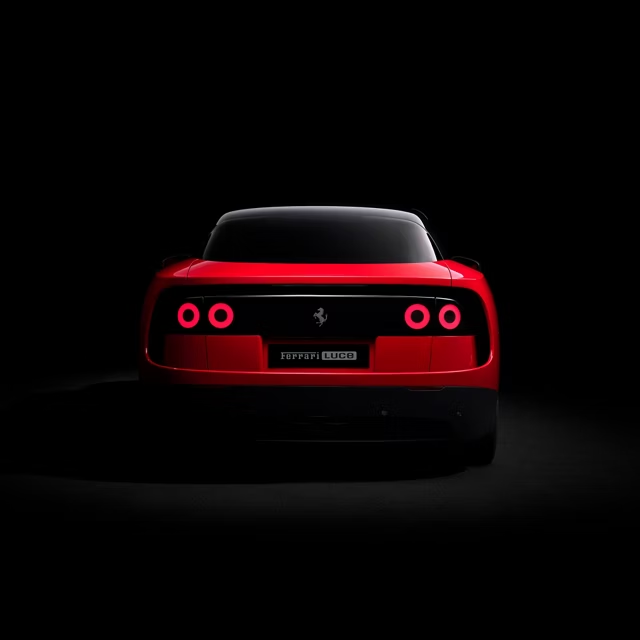
Those numbers place the Luce among the most powerful and technologically sophisticated electric performance cars ever created.
But Ferrari’s ambitions stretch beyond acceleration figures.
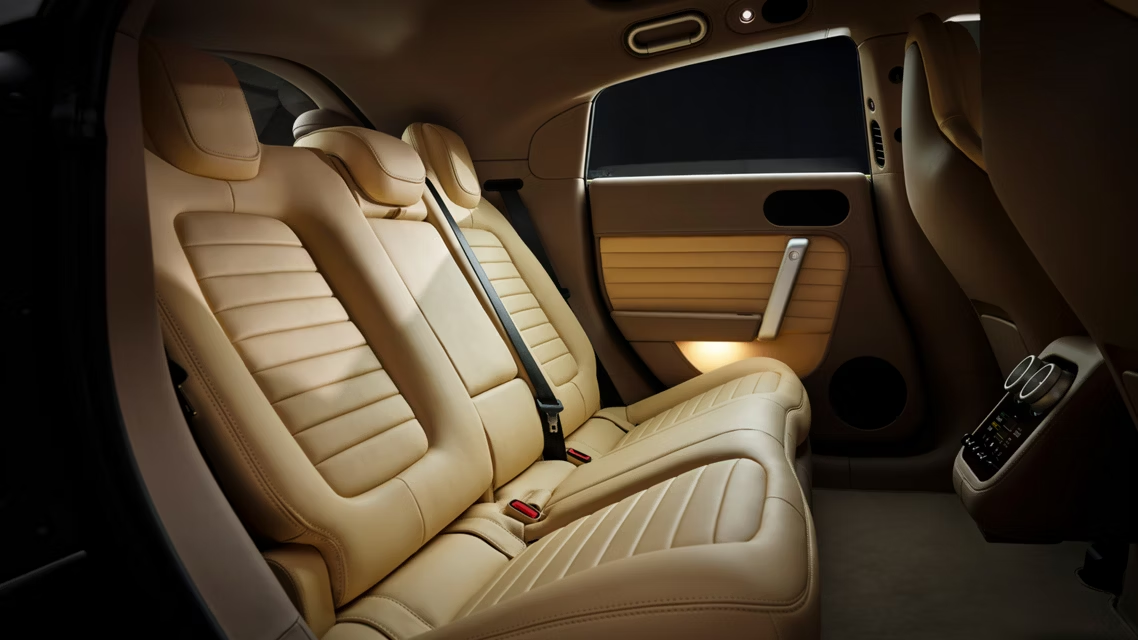
Unlike traditional two-seat supercars, the Luce introduces a practical five-seat configuration and hatchback-style layout, making it one of the most versatile road cars the company has ever produced. Ferrari believes the model could attract an entirely new audience, including buyers who may have never considered owning a Ferrari before.
The Apple Connection Behind the Design
Much of the discussion surrounding the Luce centers on its appearance.
Rather than relying exclusively on Ferrari’s internal design teams, the company partnered with LoveFrom, the creative collective founded by former Apple design chief Jony Ive and renowned industrial designer Marc Newson.
The collaboration brought a distinctly different philosophy to Maranello.
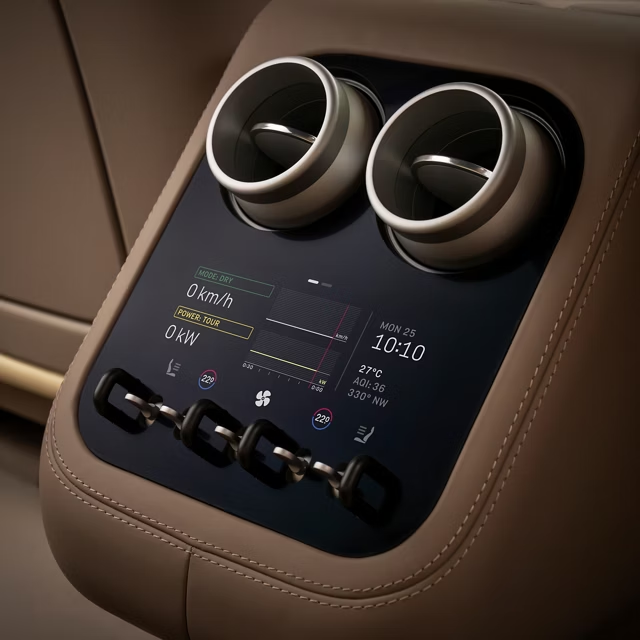
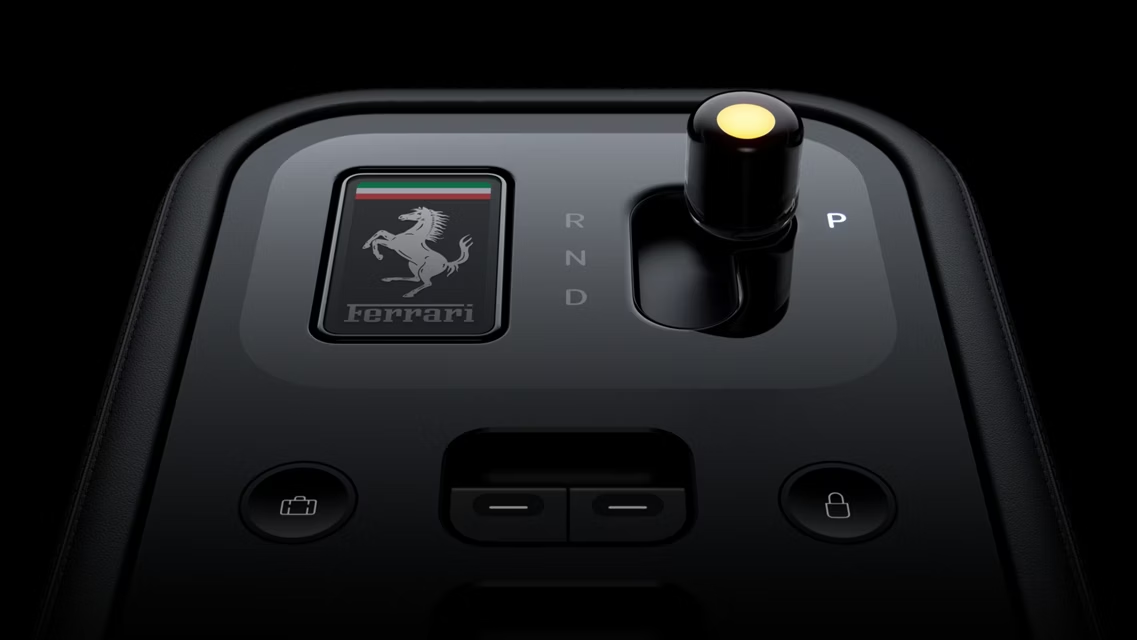
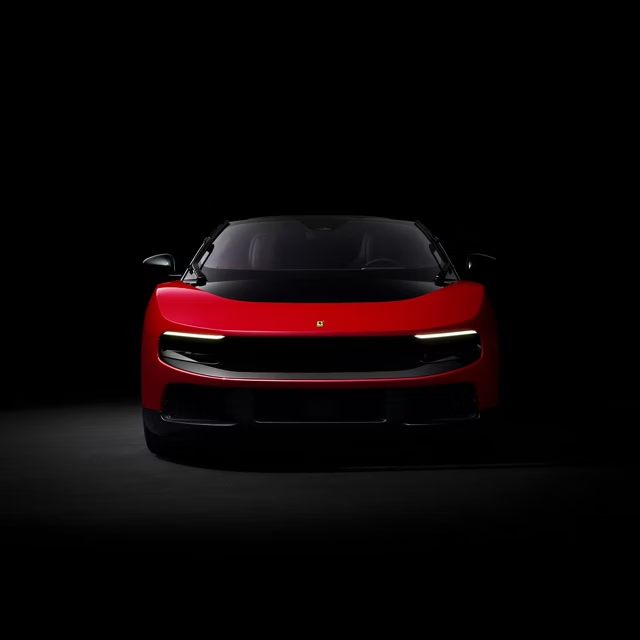
Where classic Ferraris are often defined by aggressive proportions, dramatic bodywork, and emotional visual intensity, the Luce adopts a cleaner and more restrained aesthetic. Its smooth surfaces, rounded contours, and highly aerodynamic shape prioritize efficiency and technological sophistication over theatrical styling.
The result is a vehicle that looks remarkably different from Ferrari’s traditional lineup.

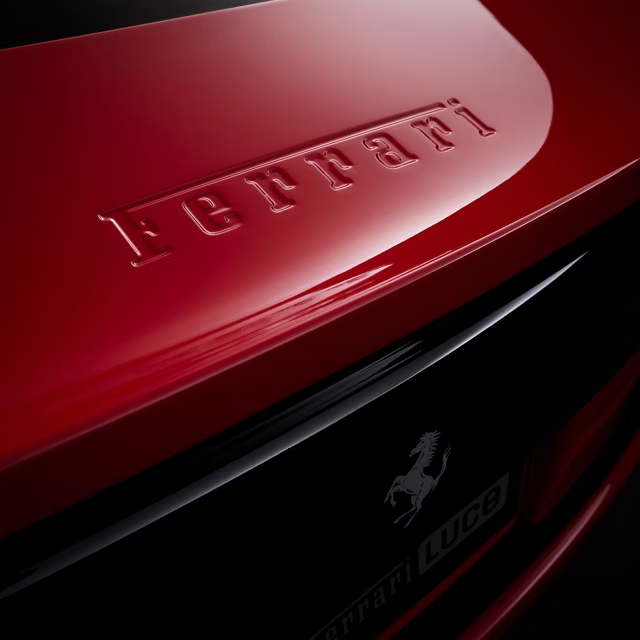
Some enthusiasts have praised the fresh approach, describing it as a bold vision for the future. Others argue that the design lacks the visual drama that has defined Ferrari for generations.
A Supercar Inspired by the Technology Era
The Luce’s arrival highlights a broader shift occurring across luxury industries.
For decades, supercars represented the ultimate status symbol. They embodied power, wealth, and aspiration. Today, however, technology has become the dominant cultural force shaping consumer desires.
Ferrari’s newest EV appears to acknowledge that reality.
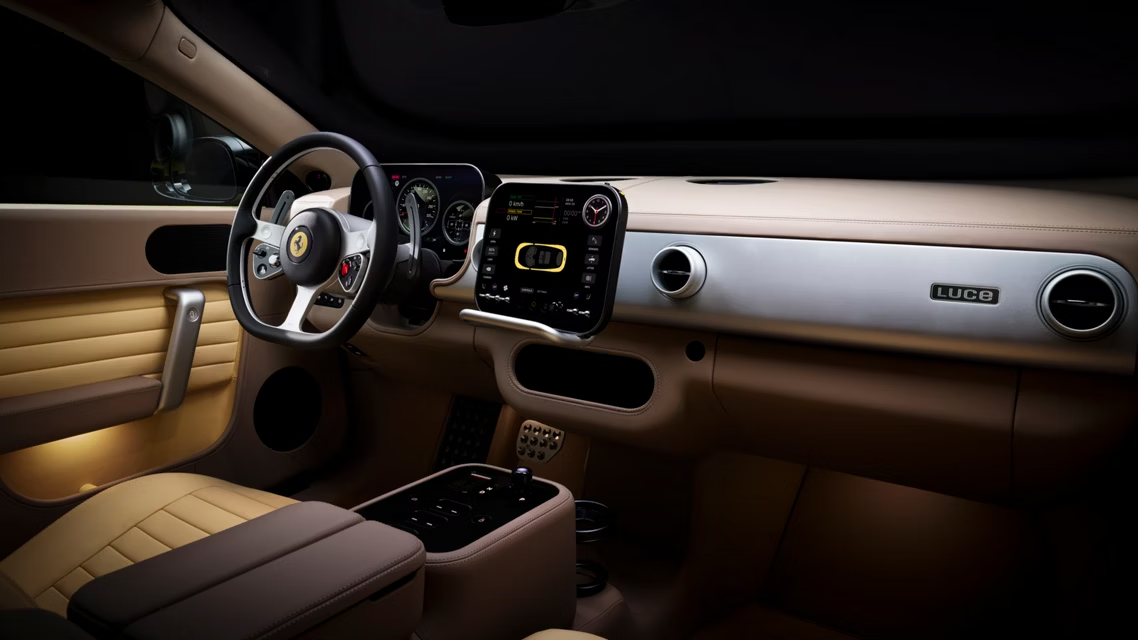
Its minimalist interior features advanced OLED displays, digital interfaces, sophisticated software systems, and an entirely new user-focused architecture. The cabin reflects influences more commonly associated with premium technology products than traditional exotic automobiles.
This fusion of Silicon Valley thinking and Italian performance engineering has led many observers to describe the Luce as the supercar equivalent of a next-generation consumer technology device.
Whether that comparison is a compliment or a criticism largely depends on whom you ask.
Ferrari Engineers a New Kind of Driving Experience
One of the biggest challenges facing electric performance cars is emotional engagement.
Electric vehicles can deliver astonishing speed, but replicating the sensory experience of a high-revving combustion engine remains difficult.
Ferrari tackled that challenge through an extensive suite of new technologies.
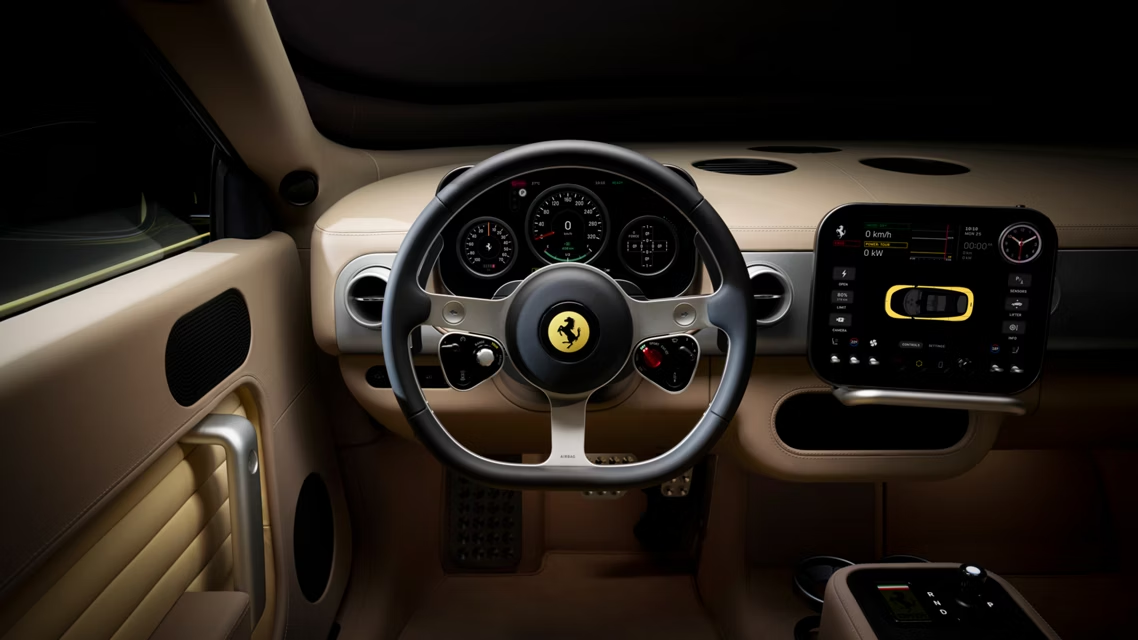
The Luce utilizes a sophisticated Vehicle Control Unit capable of monitoring and adjusting vehicle dynamics hundreds of times every second. Advanced torque vectoring, active suspension, regenerative braking systems, virtual differential technology, and the latest evolution of Ferrari’s Side Slip Control all work together to enhance handling precision.
Engineers have also developed a unique sound-generation system that captures and amplifies frequencies produced by the vehicle’s rotating components, creating a distinctive acoustic signature specifically tailored for the electric Ferrari experience.
Rather than simply chasing maximum power, Ferrari says the goal was to preserve the emotional connection that has long distinguished its vehicles.
Investors and Enthusiasts Remain Divided
Despite the technical achievements, market reaction has been far from unanimous.
Following the Luce’s unveiling, Ferrari shares experienced a notable decline as investors questioned how the company’s traditional customer base would respond to such a dramatic departure from convention.

Criticism has also emerged from within Italy itself.
Several prominent voices connected to the brand expressed reservations about the vehicle’s styling and broader direction. Concerns largely revolve around whether a silent, battery-powered Ferrari can truly capture the spirit that made the company famous.
For many enthusiasts, Ferrari’s identity has always been intertwined with the sound, character, and mechanical theater of a combustion engine. The transition to electric propulsion challenges that deeply rooted perception.
Lamborghini Says Its Hybrid Strategy Is Working
As Ferrari navigates the backlash, Lamborghini is taking a different route.
During a recent interview, Lamborghini CEO Stephan Winkelmann defended the company’s decision to focus on plug-in hybrid technology instead of launching a fully electric flagship.
According to Winkelmann, customer demand for pure-electric supercars has not developed quickly enough to justify a complete transition. As a result, Lamborghini has prioritized hybrid powertrains while postponing plans for fully electric halo models.
The company previously delayed its all-electric Lanzador project and has scaled back certain EV ambitions in favor of maintaining the emotional qualities that many buyers still associate with high-performance Italian cars.
While Winkelmann avoided directly criticizing Ferrari’s new model, his comments underscored the growing divide within the luxury performance segment regarding the pace of electrification.
A Defining Moment for the Supercar Industry
The debate surrounding the Ferrari Luce extends far beyond a single vehicle.
It represents a fundamental question confronting nearly every premium performance manufacturer: How do you embrace the future without abandoning the characteristics that built your reputation?
Ferrari has chosen to answer that question with boldness.
The Luce combines extraordinary performance, advanced software, sustainable manufacturing techniques, futuristic design, and everyday usability into a package unlike any previous Ferrari. Whether it ultimately becomes a landmark success or a controversial experiment remains to be seen.
What is already clear, however, is that the Luce has accomplished something few modern supercars achieve—it has sparked a conversation about the future of automotive passion itself.
And in an industry standing at the crossroads of tradition and technology, that may be Ferrari’s most significant achievement yet.
For more information about the Ferrari Luce, please visit their official website.
👉 Please 📩SUBSCRIBE to us for more real-world EV analysis, news, and deep dives — written for EV fans by EV fans.

Hey, I’m Badal! I’m super passionate about cars—especially electric ones. Whether it’s EVs, electric trucks, bikes, or anything with a battery and wheels, I’m all in. I love writing blogs and articles that break things down for fellow enthusiasts and curious readers alike. Hope you enjoy the ride as much as I do! Enjoyed reading? You can buy me a coffee on PayPal ☕ → paypal.me/BadalBanjare