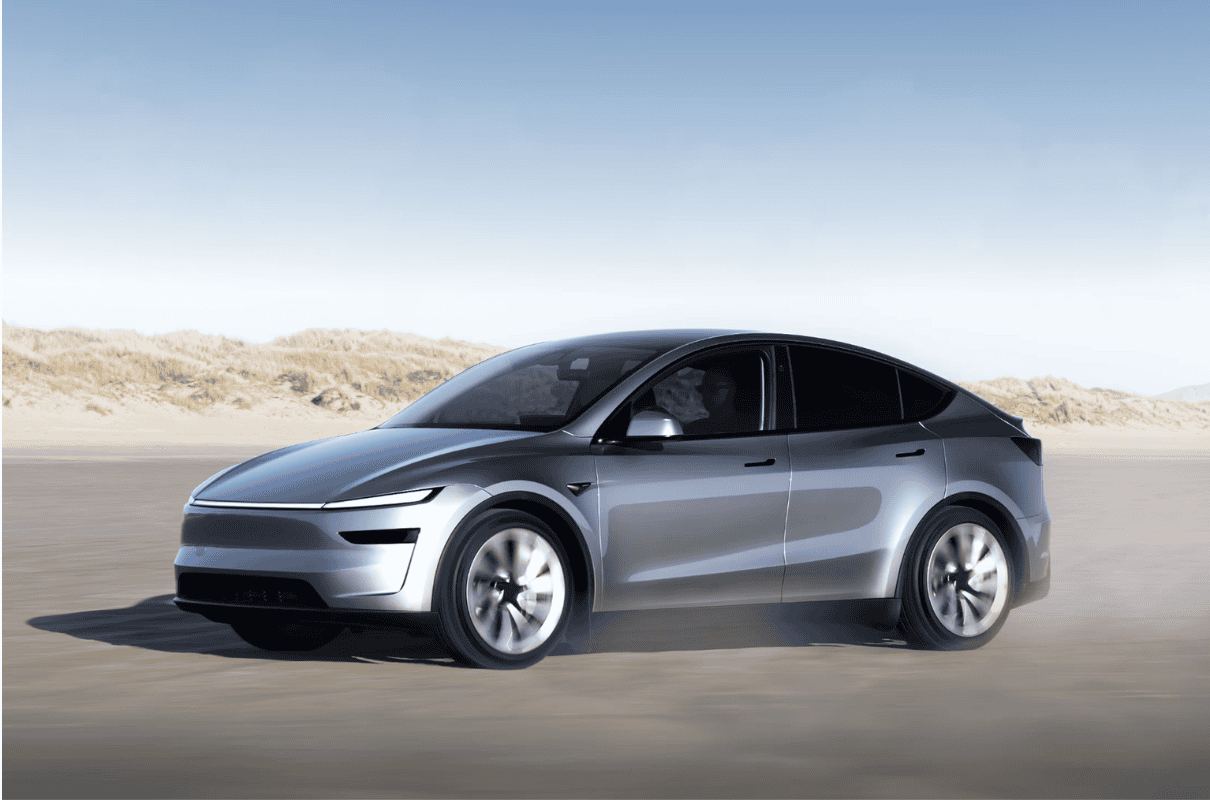

Tesla’s Model Y has reached a rarefied milestone. Over the past three years, the electric crossover has recorded more than 3.4 million deliveries worldwide and generated well over $150 billion in revenue. That scale would be astonishing for any vehicle — but for a fully electric model, it is transformative. The achievement underscores just how rapidly the global auto market is tilting toward electrification.
Yet the celebration arrives with a twist. At the exact moment that Tesla touts the Model Y as the world’s best-selling car for a third straight year, analysts are increasingly split over whether that claim holds up for 2025.
Over the last 36 months, Model Y demand has surged on every continent where Tesla operates. Industry trackers attribute the model’s momentum not only to pricing strategy and charging infrastructure, but also to Tesla’s intense reliance on software and AI-driven manufacturing. Gigafactories now rely heavily on automated quality control, predictive maintenance, and robotics to streamline assembly — an approach many analysts credit with enabling Tesla to scale quickly while maintaining margins.

The Model Y has already secured its place in history. In 2023, it became the first battery-electric vehicle to top the global sales leaderboard, surpassing long-established gasoline nameplates. That moment marked a seismic psychological shift: an EV had finally dethroned the internal-combustion establishment.
By 2024, the race tightened. Depending on the dataset used, Model Y and Toyota’s RAV4 finished nearly neck-and-neck. Some rankings placed Tesla narrowly ahead; others showed the Toyota edging past. The margins were measured in thousands — not hundreds of thousands — of vehicles.
For 2025, the picture turns more complex.
Tesla CEO Elon Musk has publicly reiterated that the Model Y remains the world’s best-selling vehicle. However, preliminary global registration data compiled by independent analysts points toward a different outcome. Early tallies across major markets suggest that Toyota’s RAV4 has likely reclaimed the top position, with the Corolla also remaining firmly in contention.
Current analyst estimates indicate the following approximate annual volumes:
- Toyota RAV4 — around 1.2 million units
- Toyota Corolla — around 1.08 million units
- Tesla Model Y — roughly 1.0–1.05 million units
Model Y’s year-over-year volume appears to have softened by double digits, while RAV4 sales remained broadly stable. Final numbers are still being consolidated, and Tesla’s practice of reporting combined Model 3/Y deliveries — rather than disclosing model-specific totals — makes precise comparisons slower and more difficult.
Even so, one fact is not in dispute: the Model Y remains one of the three most-sold vehicles on Earth, despite being fully electric and, in many markets, more expensive than its combustion rivals. That alone is extraordinary.
The Model Y also continues to evolve. Recent refreshes have brought revised styling, quieter cabins, upgraded displays, and performance variants with brutal acceleration and improved range. Tesla’s strategy prioritises incremental updates over traditional, infrequent full-generation redesigns, keeping the vehicle feeling perpetually current.
Behind the scenes, software remains Tesla’s economic engine. Full Self-Driving subscriptions, over-the-air feature unlocks, and in-car services are steadily adding recurring revenue streams. Tesla’s AI training infrastructure — including its Dojo supercomputer — is designed to accelerate autonomous driving development and support future robotaxi ambitions.
Whether or not 2025’s sales crown ultimately belongs to Tesla or Toyota, the broader story is clear. An electric SUV is now firmly entrenched in the same conversation as the world’s most prolific gasoline models. That would have sounded implausible just a few years ago.
The scoreboard will be finalised soon, once global registration databases close the books. Titles and trophies aside, Model Y has already reshaped the competitive landscape — and forced the rest of the auto industry to play on electric terms.
For more information about the Tesla Model Y, please visit their official website.
👉 Please 📩SUBSCRIBE to us for more real-world EV analysis, news, and deep dives — written for EV fans by EV fans.

Hey, I’m Badal! I’m super passionate about cars—especially electric ones. Whether it’s EVs, electric trucks, bikes, or anything with a battery and wheels, I’m all in. I love writing blogs and articles that break things down for fellow enthusiasts and curious readers alike. Hope you enjoy the ride as much as I do! Enjoyed reading? You can buy me a coffee on PayPal ☕ → paypal.me/BadalBanjare