

Petrol prices had already been going up before the geopolitical tensions around Iran pushed crude oil prices higher again. For countries that rely heavily on imported fuel — Australia imports about 80 percent of its supply — these international disruptions can quickly reverberate through local markets. The outcome is familiar: longer lines at petrol stations, and motorists’ frustration on the rise. Inevitably, that leads many drivers to ask the same question. Is it finally time to switch to Electric Vehicles?
The idea of avoiding a weekly petrol fill-up certainly sounds appealing. But the bigger obstacle for many consumers has been, and still remains, the higher initial price tag attached to electrics.
That gap, however, has been closing.
As competition heats up and more manufacturers enter the EV space, prices have fallen broadly. All the same, most electric vehicles are still several thousand dollars more than their petrol-powered or hybrid counterparts.
But ownership costs tell a different story. EVs are often much cheaper to fuel and maintain over the long haul, meaning that drivers eat some — but not all — of that initial premium.
So the real question is: how long until you break even?
Understanding the EV Payback Equation
To explore this, a public EV payback calculator was developed to compare several popular electric vehicles with their hybrid equivalents currently available in Australia.
The tool estimates how long it takes the lower running costs of an EV to pay back the premium paid for its purchase compared with a conventional vehicle.
One factor looms as decisive —
Charging habits.
Drivers who are heavily dependent on others’ expensive public fast chargers will have a slower return on their investment. In contrast, owners of vehicles primarily charged at home typically reach the break-even point far more quickly — in some cases, in as little as a few years.
Why EVs Cost Less to Run
There are three primary reasons why electric vehicles have lower operating costs.
1. Electricity Is Usually Cheaper Than Fuel
Electricity almost always costs less per kilometre than petrol or diesel. The gap is even wider when drivers charge at home, using off-peak electricity rates or rooftop solar power.
2. Superior Energy Efficiency
Battery-electric vehicles can convert that energy into motion much more efficiently than internal combustion engines. While conventional engines waste a lot of energy in heat, electric drivetrains are much more efficient.
To put it simply, EVs can achieve greater motion with less energy.
3. Lower Maintenance Requirements
Electric vehicles have many fewer mechanical parts, too. There are no oil changes, fewer moving parts to wear out and regenerative braking that reduces brake pad strain by using the motor to slow down, thereby recharging the battery.
These mechanical advantages help reduce servicing costs over time.
Worries about battery degradation — once such a concern for potential buyers — are also receding. In everyday practice, modern EV batteries tend to outlast the average vehicle lifespan.
Predictable Energy Costs
Another benefit is price stability.
Petrol prices change every day and are subject to the vagaries of global events. Electricity prices, by contrast, do not vary as quickly. Drivers who charge at home often charge during cheaper off-peak hours or use solar energy generated on their own rooftops.
These trends make the cost of EV ownership more predictable over time.
Electric vehicles are still not the right choice for every driver at every period of time.
A Real-World Comparison
Consider a common example.
The MG4 Excite electric hatchback retails for around A$42,000 drive-away, whereas the Toyota Corolla Hybrid is approximately A$40,000.
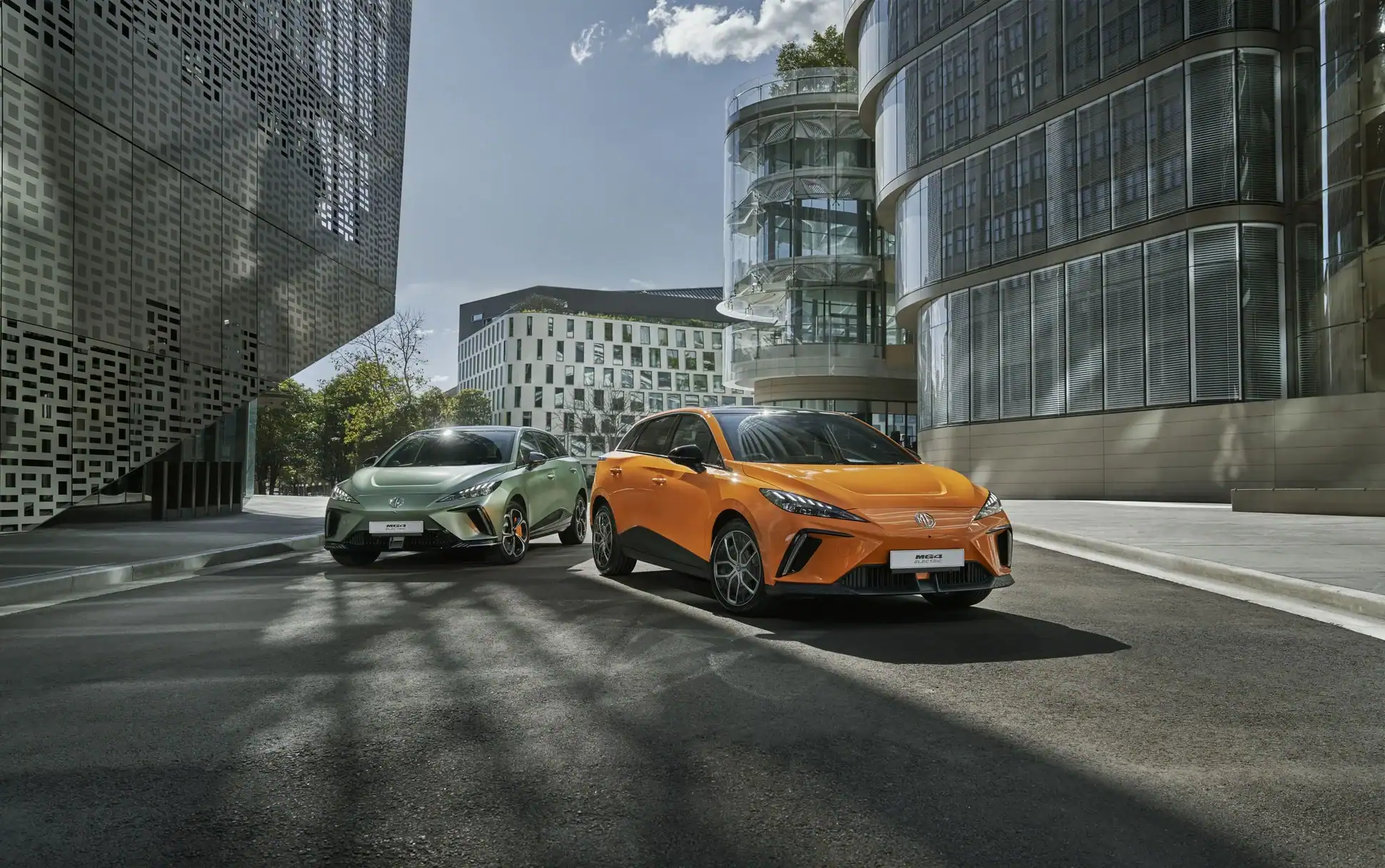
That creates a price difference of about A$1,900.
The EV payback calculator estimates how quickly the lower operating costs might offset that difference.
Three annual driving distances are modelled:
- 10,000 km – light usage
- 15,000 km – average driving
- 20,000 km – heavy use
It also considers three charging patterns:
- Mostly home charging
- A combination of public and home charging
- Mostly public fast charging
The analysis includes five vehicle pairs, each representing the decision many buyers face today: choosing between a battery electric vehicle and a hybrid in the same size and price segment.
Hybrids were deliberately chosen as comparison vehicles, since they already improve fuel economy considerably. That makes the analysis conservative.
For each pair, the calculator measures the price and annual operating costs, and uses those figures to estimate how long it would take for the EV’s lower energy and maintenance expenses to offset the higher purchase price.
These results do not constitute financial advice. Instead, they offer example comparisons based on explicit assumptions.
What the Results Show
Payback time is the time it takes an EV to recoup its initial premium.
The shorter the payback period, the faster savings accumulate. Longer ones suggest that the additional cost lingers for many years or never fully recovers.
But putting the numbers in annual savings may help clarify the larger point.
One conclusion stands out clearly:
The vehicle itself is only half the equation; charging behaviour matters too.
It provides regular savings because you charge mainly at home. And heavy reliance on public fast chargers, meanwhile, can take a big bite—or completely erase—the financial benefits.
Charging at home during off-peak hours, say 20 cents per kilowatt-hour. At an ultrafast public charger, that price could be as much as 60 cents per kilowatt-hour.
For most cars with a 60 kWh battery, that difference is massive:
- About A$12 for a full home charge
- Up to A$36 at a public fast charger
In other words, affordable EVs rely on more than sticker price — they require access to affordable charging.
Charging Patterns Shape the Economics
The analysis indicates that when vehicles are charged predominantly at home and driven approximately 15,000 kilometres a year, all five EV models deliver sizable savings.
The break-even point can, in some cases, occur much earlier than the average ownership period of about a decade.
Two models stand out in particular:

They offer a low purchase premium along with average energy costs that are considerably lower than those of hybrid competitors.
Under baseline assumptions:
- In 3–5 years, the MG4 Excite can recoup its price premium.
- The BYD Atto 3 could take 5–8 years to get there.
Drivers who take longer distances each year often get better payback times, because they save fuel faster.
The Fast-Charging Trade-Off
If charging gradually transitions to a public fast-charging network, the financial calculus flips.
Electricity costs rise. Savings shrink.
This effect is most pronounced when EVs are pitted against extremely fuel-efficient hybrid vehicles that already use very little gas.
Not that EVs suddenly become a bad choice. Rather, it underscores an important reality: increasingly expensive public charging can erode the cost advantage in many cases, especially when petrol prices are comparatively low.
For drivers who cannot charge at home, checking the cost of nearby public chargers is a smart initial step in deciding whether to purchase an electric vehicle.
What This Means for Drivers
Electric vehicles tend to provide the biggest financial payoff when two things are true:
- Most charging occurs at home
- Annual driving distances are relatively high
In those conditions, operating costs decline dramatically, and the payback period for the initial outlay is fairly short.
But if a driver uses a lot of public fast charging, the payback period is much less certain.
For drivers considering the switch to electric mobility, a runaway focus on purchase price might not tell the whole story. Perhaps more useful is to think about how you will charge most of the time and forecast the long-term operating costs associated with that charging pattern.
In the end, the economics of electric vehicles are determined less by what’s on the badge on the bonnet and a whole lot more by how — and where — that battery gets charged.
👉 Please 📩SUBSCRIBE to us for more real-world EV analysis, news, and deep dives — written for EV fans by EV fans.

Hey, I’m Badal! I’m super passionate about cars—especially electric ones. Whether it’s EVs, electric trucks, bikes, or anything with a battery and wheels, I’m all in. I love writing blogs and articles that break things down for fellow enthusiasts and curious readers alike. Hope you enjoy the ride as much as I do! Enjoyed reading? You can buy me a coffee on PayPal ☕ → paypal.me/BadalBanjare