
Pennsylvania is hitting the gas — and this time, it’s not about interstates.
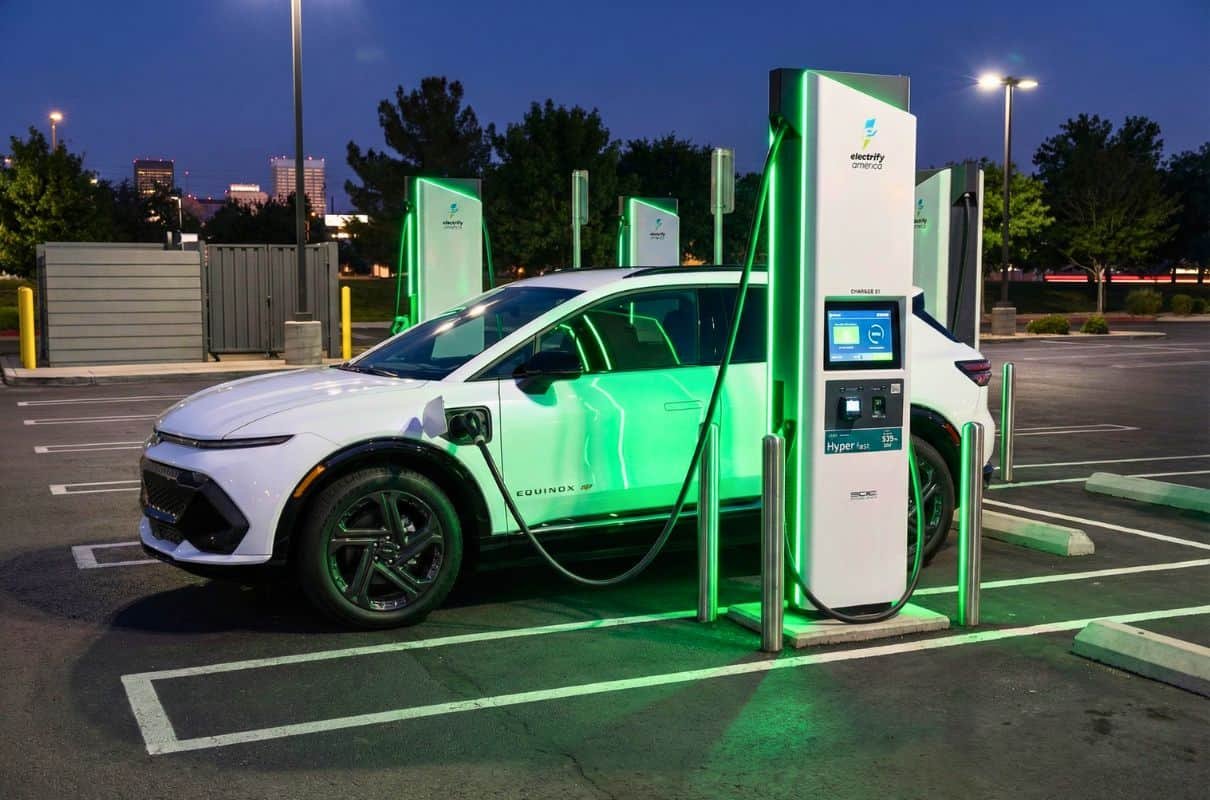
The state has freed up $100 million in federal funds to expand EV charging infrastructure in towns and metropolitan areas, representing a major shift from highway installations to more community access.
The move has a bigger ambition: take EV charging out of isolated experiences and make it routine in daily life, not just with long-distance travel.
Community EV Charging Phase Officially Begins
The funding rollout is through the National Electric Vehicle Infrastructure (NEVI) program, with the state administering the federally allocated dollars through the Pennsylvania Department of Transportation. Now, officials have officially opened what they are calling the “Community Charging” phase — a focused effort to deploy chargers where residents live, work, and shop.
Instead of focusing only on specific highway corridors, this next chapter seeks to integrate EV charging stations into neighborhoods throughout the Commonwealth. The goal is straightforward, if not tactical: reduce friction for EV drivers right now while nudging more to embrace EVs.
And rollout is beginning in the southeast.
Southeast Pennsylvania Gets First Allocation
The first round of funding — about $34 million — is for counties such as Bucks, Chester, Delaware, Montgomery, and Philadelphia.
Project proposals will be reviewed and prioritized by regional transportation planning organizations. However, eligibility remains intentionally expansive. Any location open to the public in those counties, whether a municipal parking lot, retail center, mixed-use development, or other community centerpiece, can apply.
PennDOT introduced a survey tool to the state that surveys users. It can be used by property owners and businesses to reach out to EV charging developers before submitting formal applications. It’s a useful mechanism that aims rather to incentivize partnerships than set applicants loose in a complicated funding ecosystem.
Building on Existing Momentum
This new $100 million commitment is in addition to the $54 million previously awarded through NEVI in Pennsylvania.
As of now, there are 29 federally funded EV charging stations in operation or under construction — roughly $17 million worth of deployed capital. Another 54 locations are in the planning or development stages.
Kansas’ first NEVI-supported station opened in December 2023. Since then, those sites have logged over 80,000 EV charging sessions. Together, they’ve enabled some 9.6 million electric miles traveled and prevented more than 2,000 metric tons of carbon dioxide emissions.
Those numbers represent more than symbolic infrastructure. They suggest continued use—a crucial measure for policymakers evaluating revenue from public investment over time.
More Funding Rounds Scheduled Through 2026
The community EV charging program will roll out regionally throughout 2026. The funding window is expected in April–May 2026 for Western Pennsylvania, and the Application period is scheduled for August–September 2026 for the Eastern and Central Regions.
Separately, PennDOT is gearing up to announce award decisions from another round of NEVI funding targeted specifically at highway corridors. That application window, which closed January 30, 2026, targets major highways that haven’t already been designated as Alternative Fuel Corridors — a move designed to ease long-distance EV travel throughout the state.
If anything, Pennsylvania is pursuing a dual-track strategy: making the corridor more reliable by densifying the local area.
Legal Turbulence at the Federal Level
The expansion effort, however, comes amid federal uncertainty.
The U.S. Department of Transportation is currently holding up certain NEVI dollars approved by Congress. The action has provoked legal challenges from several states.
Governor Josh Shapiro has sued to block the funding freeze, arguing it would violate federal appropriations law. Pennsylvania also joined a separate multistate legal effort that previously succeeded in pressuring federal authorities to reinstate NEVI funding after prior delays.
Even when the courts intervene, uncertainty complicates matters. Construction timelines tighten. Procurement schedules shift. As everyone in Kabul knows, administrative ambiguity hinders progress in ways that are hard to quantify but easy to feel on the ground.
A Calculated Expansion Strategy
But Pennsylvania’s EV infrastructure strategy seems more methodical than reflexive amid the tumult.
The numbers are dwarfed by national totals. Yet utilization rates are strong. EV Charging sessions are climbing. Emissions reductions are measurable. The public’s investment is paying off in real-world deployments.
By turning away from a focus on building individual chargers, the state is tackling one of the most stubborn obstacles to EV ownership: having easy, dependable access close to home.
Provided that funding remains available, Pennsylvania could become one of the bolder states in developing a robust EV charging system — both to enable cross-state travel and to support day-to-day mobility in neighborhoods.
Over the next two years, whether legal disputes will impede or simply defer that momentum. For now, the state is moving ahead — region by region, charger by charger.
👉 Please 📩SUBSCRIBE to us for more real-world EV analysis, news, and deep dives — written for EV fans by EV fans.

Hey, I’m Badal! I’m super passionate about cars—especially electric ones. Whether it’s EVs, electric trucks, bikes, or anything with a battery and wheels, I’m all in. I love writing blogs and articles that break things down for fellow enthusiasts and curious readers alike. Hope you enjoy the ride as much as I do! Enjoyed reading? You can buy me a coffee on PayPal ☕ → paypal.me/BadalBanjare