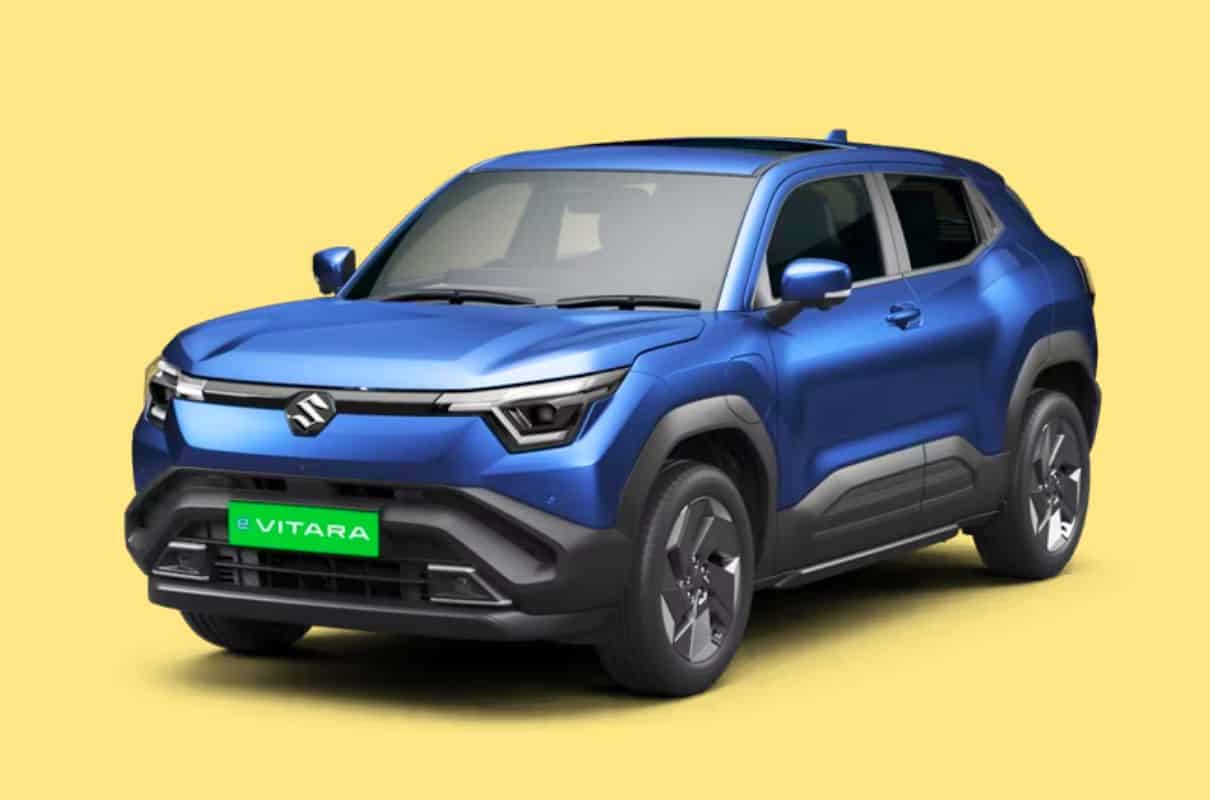

Maruti Suzuki has now taken off the wraps of its much-anticipated electric SUV eVitara — and it hasn’t stepped lightly into the space. It’s barged in with a price tag that would upend the industry and an audacious ecosystem plan.
But there’s a twist. While the headline figure is attention-grabbing, early customers may need to be patient.
BaaS model: India’s largest carmaker has launched the Maruti eVitara with an introductory price of ₹10.99 lakh (ex-showroom). But management has suggested that production constraints could keep supplies tight through July as the company juggles exports, domestic demand, and its existing high-volume models.
A Price Strategy Designed to Disrupt
Priced at ₹10.99 lakh, the eVitara is now one of the most affordable midsize electric SUVs in the country. Pricing is for the base Delta variant, which comes fitted with a 49kWh battery pack, on a subscription-based battery rental scheme priced at ₹3.99/km.
Factor in the estimated electricity costs of about ₹1 per km, and the total running cost remains plausible even over long ownership cycles.
It directly challenges existing players such as the MG Motor India, which has ZS EV, apart from electric vehicles of Hyundai Motor India, Tata Motors, and Mahindra & Mahindra.
Packed price list of higher variants expected soon, but the opening salvo is quite large: Maruti will make EVs wallet-friendly for the mainstream buyer.
Production Bottleneck Until July
That confidence in pricing is underpinned by delicate manufacturing calculus.
The eVitara is assembled at Maruti Suzuki’s production facility in Gujarat. The vehicle rolls out from a shared assembly line with an annual capacity of about 100,000 units. That line also makes the popular Fronx and deals with export figures — a vital income for the company.
Supply calibration is thus in progress.
Company officials have said deliveries could be tight until July, when capacity on the line increases. When it does, output will increase meaningfully in the second half of the fiscal year.
For now, distribution between export sales and domestic bookings will need to be split as thin as a hair.
Two Battery Options, Three Variants
The eVitara comes in Delta, Zeta, and Alpha variants.
- 49kWh battery - Available only with the Delta variant
- 61 kWh battery – available in Zeta and Alpha

Larger 61 kWh packs are also available and claim a certified driving range in excess of 500 km with a peak output of 174 PS. Both are front-wheel drive, while there’s an all-wheel-drive variant available in international markets.
The SUV is 4,275 mm long, and it has a wheelbase of 2,700 mm – putting this vehicle firmly in the thick of India’s hot midsize electric SUV segment.
Design: Conservative, Not Futuristic
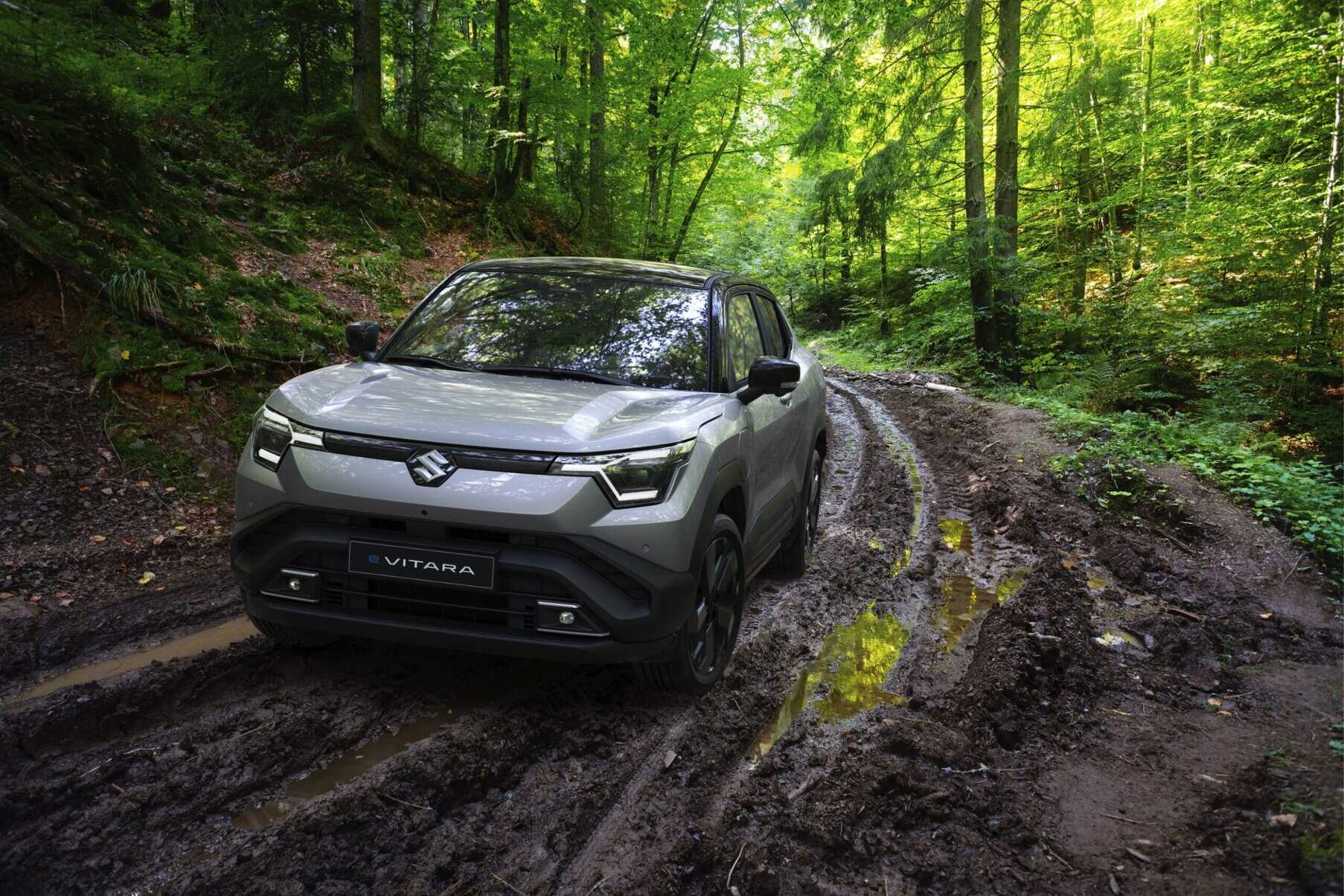
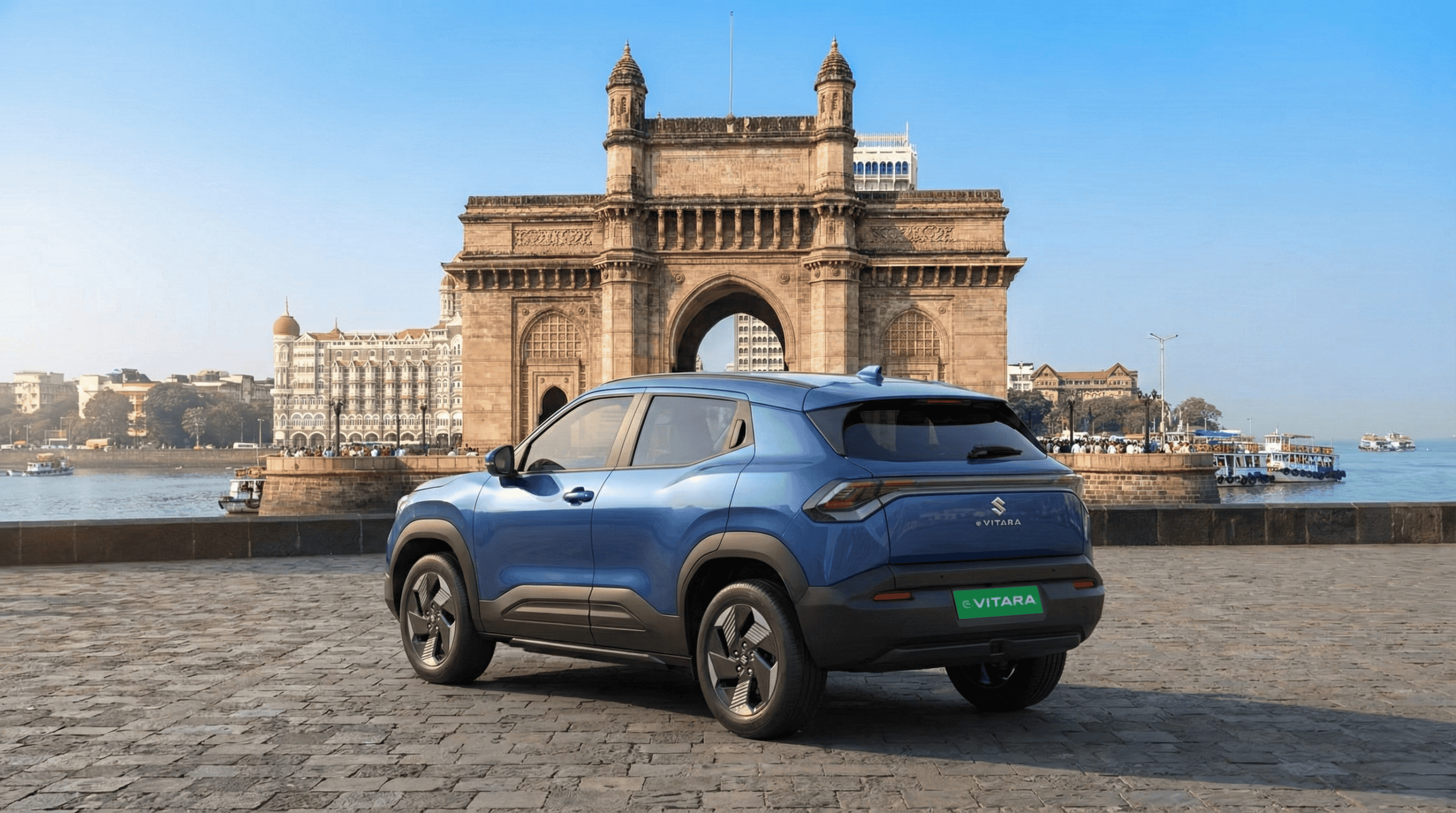
The eVitara is a little classier. Unlike some competitors that push the sci-fi looks envelope, the eVitara is more realistic and down to earth. It appears to be an SUV — and then an EV.
Squared proportions. Muscular stance. Y-shaped LED lighting signatures.
There’s no full-width light bar or dramatic coupe roofline, just the classic proportions of a swoopy station wagon. Instead, its styling reads as deliberate and familiar — one imagines deliberately so, in order to put traditional buyers who may be wary of electrification at ease.
It will be sold through Maruti’s Nexa distribution channel, the premium sales outlet.
Feature-Rich and Safety-Focused
Inside, the cabin is a break from tradition as far as Maruti cabin layouts go. Dual screens — a 10.25-inch digital driver display and a 10.1-inch infotainment system — stitch together the dashboard.
The most important controls also retain their physical buttons—a well-considered option in an age of touchscreen minimalism.

Other features of note are ventilated seats, a power driver seat, Infinity audio, connected car tech, and Level-2 ADAS.
In terms of safety, the eVitara features a five-star rating on Bharat NCAP and comes with standard seven airbags. Powering the e2oPlus is a maintenance-free battery, which is available with an 8-year/1,60,000 km warranty that ensures peace of mind for customers.
Building an EV Ecosystem, Not Just a Car
Maruti’s plan goes beyond iron and lithium.
The company has tied up with 13 charging network providers and set up over 2,000 charging points at dealerships. The long-term ambition is to have 100,000 public charging points by 2030.
India’s electric vehicle penetration is still at 4–5 per cent of passenger vehicle sales. With a more than 40 per cent share in the conventional car market, Maruti’s entry may move the needle from curiosity to conviction even faster.
The Bigger Picture
For years, critics had forced Maruti to defend its slowness in electrics. Rivals had already staked territory. The market was evolving.
Now, cautiously but decisively, the brand has landed.
The eVitara may not be the flashiest electric SUV on sale. It may not be capable of neck-snapping strapline torque numbers. What it does provide, though, is something subtler: familiarity, cost effectiveness, and the reassurance of India’s biggest service network.
If production ramps fine after July, the real effect may come in the second half of the year.
India’s electric vehicle scene just got a lot more exciting.
For more information about the 2026 Maruti Suzuki eVitara, please visit their official website.
👉 Please 📩SUBSCRIBE to us for more real-world EV analysis, news, and deep dives — written for EV fans by EV fans.

Hey, I’m Badal! I’m super passionate about cars—especially electric ones. Whether it’s EVs, electric trucks, bikes, or anything with a battery and wheels, I’m all in. I love writing blogs and articles that break things down for fellow enthusiasts and curious readers alike. Hope you enjoy the ride as much as I do! Enjoyed reading? You can buy me a coffee on PayPal ☕ → paypal.me/BadalBanjare