


Australia’s electric vehicle momentum has hit a pivotal moment. A federal review is now underway that could reshape — or potentially end — one of the country’s most influential EV incentives, the Fringe Benefits Tax (FBT) exemption. Introduced less than three years ago, the policy has already helped nearly 100,000 Australians move into electric cars. Now, its future is officially under examination.
The review, mandated under legislation passed in 2022, will assess whether the electric car discount is still delivering value for money — or whether its runaway popularity has made it financially unsustainable.
A Policy That Outpaced Expectations
When the FBT exemption came into effect on July 1, 2022, it was designed as a catalyst. By removing fringe benefits tax on eligible electric vehicles priced under $91,387 — the Luxury Car Tax threshold for fuel-efficient models — the government aimed to reduce upfront costs and accelerate early adoption.
It worked. Perhaps too well.
Treasury estimates now show the exemption alone could cost taxpayers $1.35 billion in the 2025–26 financial year, a dramatic jump from earlier projections of $335 million. Long-term modelling suggests total EV tax concessions — including both the FBT exemption and import tariff relief — could reach $23.4 billion by 2035–36.
Those figures dwarf the original $110 million estimate attached to the policy when it was first announced.
EV Adoption Surges Nationwide
Despite the ballooning cost, the policy’s impact on the market is undeniable. According to Treasury data, electric vehicles accounted for just 3.8 percent of new-car sales at the end of 2022. By November 2025, that figure had climbed to 8.2 percent.
The number of models available has also exploded. Australia now offers more than 160 electric vehicles, with around 10 priced below $40,000. When the current government took office, buyers had access to just 56 models — and only two under that price point.
Leasing data shows uptake has been strongest in outer suburban areas such as Baulkham Hills in New South Wales, Werribee in Victoria, and Springfield in Queensland, highlighting the role salary packaging has played in easing cost-of-living pressures.
Plug-In Hybrids Already Left Behind
One major shift has already taken place. Plug-in hybrid vehicles lost eligibility for the FBT exemption on April 1, 2025, a decision that sparked backlash from buyers and manufacturers alike. Popular models such as the Mitsubishi Outlander PHEV and BYD Sealion 6 are no longer covered.
The review will examine whether excluding plug-in hybrids was justified — and whether any vehicle categories should remain eligible going forward.
Government Signals Caution, Not Panic
Treasurer Jim Chalmers has struck a measured tone, emphasizing that the review was always part of the original plan.
“The take-up of electric vehicles has exceeded expectations, and that’s been good for drivers, good for business, and good for the climate,” he said. “The electric car discount helped make EVs more affordable and supported early adoption. As promised, the next step is to review it.”
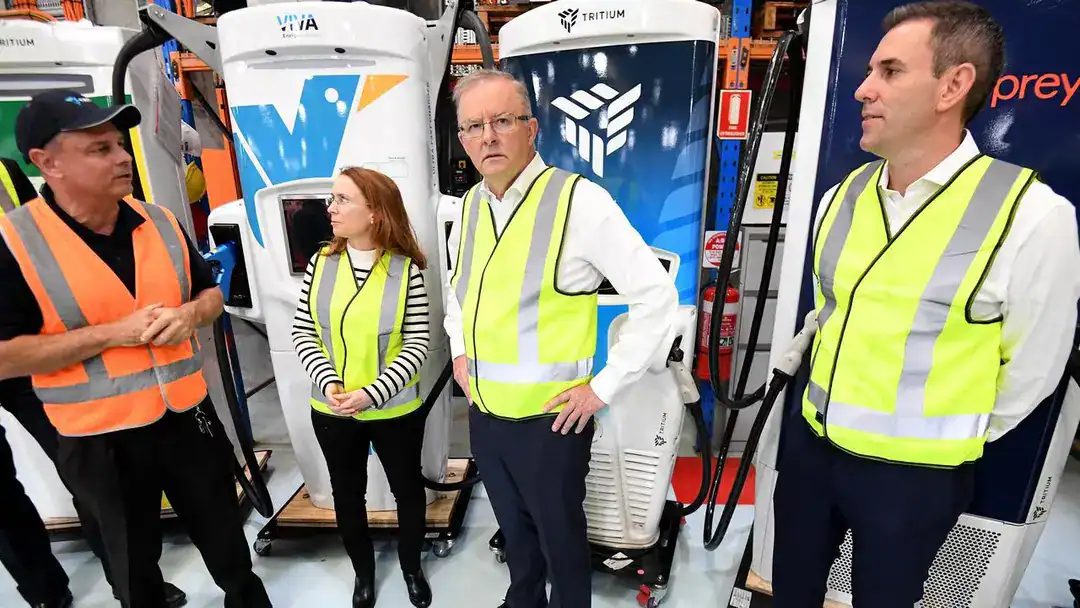
Notably, the government has stopped short of confirming whether the incentive will be extended, modified, or scrapped altogether.
The review will be conducted by the Australian Centre for Evaluation, which will assess cost-effectiveness, emissions reductions, charging infrastructure growth, consumer confidence, and broader market maturity.
Bigger Climate Goals in the Background
The timing is no coincidence. Australia’s National Vehicle Emissions Standard came into force on January 1, 2025, introducing strict fleet-wide CO₂ limits and financial penalties for non-compliant automakers. At the same time, the government has launched a Vehicle-to-Grid Network initiative, encouraging EV owners to feed surplus electricity back into the national grid.
Prime Minister Anthony Albanese has also floated the possibility of abolishing Luxury Car Tax altogether — a move that could further complicate the future of EV pricing and incentives.
What’s at Stake for Buyers and Businesses
The FBT exemption has become deeply embedded in Australia’s salary packaging ecosystem. Any rollback could ripple through fleet purchasing, novated leasing, and the used-EV market, where higher turnover has helped stabilize prices.
For households, fewer incentives could mean slower EV adoption just as prices begin to normalize. For policymakers, the challenge is deciding whether the market can now stand on its own.
What Happens Next
Public submissions on the review are open until February 6, 2026, giving industry players, consumers, and advocacy groups time to weigh in. The final decision will hinge on whether the electric car discount is still necessary — or whether its mission has already been accomplished.
Either way, the outcome will play a defining role in Australia’s clean-transport future.
👉 Please 📩SUBSCRIBE to us for more real-world EV analysis, news, and deep dives — written for EV fans by EV fans.

Hey, I’m Badal! I’m super passionate about cars—especially electric ones. Whether it’s EVs, electric trucks, bikes, or anything with a battery and wheels, I’m all in. I love writing blogs and articles that break things down for fellow enthusiasts and curious readers alike. Hope you enjoy the ride as much as I do! Enjoyed reading? You can buy me a coffee on PayPal ☕ → paypal.me/BadalBanjare





Hmm it seems like your website ate my first comment (it was super long) so I guess I’ll just
sum it up what I submitted and say, I’m thoroughly enjoying your
blog. I too am an aspiring blog writer but I’m still new to the whole thing.
Do you have any tips and hints for newbie blog writers?
I’d definitely appreciate it.
Amazing! Its really remarkable post, I have got much clear
idea concerning from this paragraph.