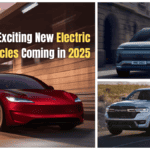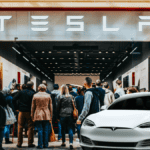
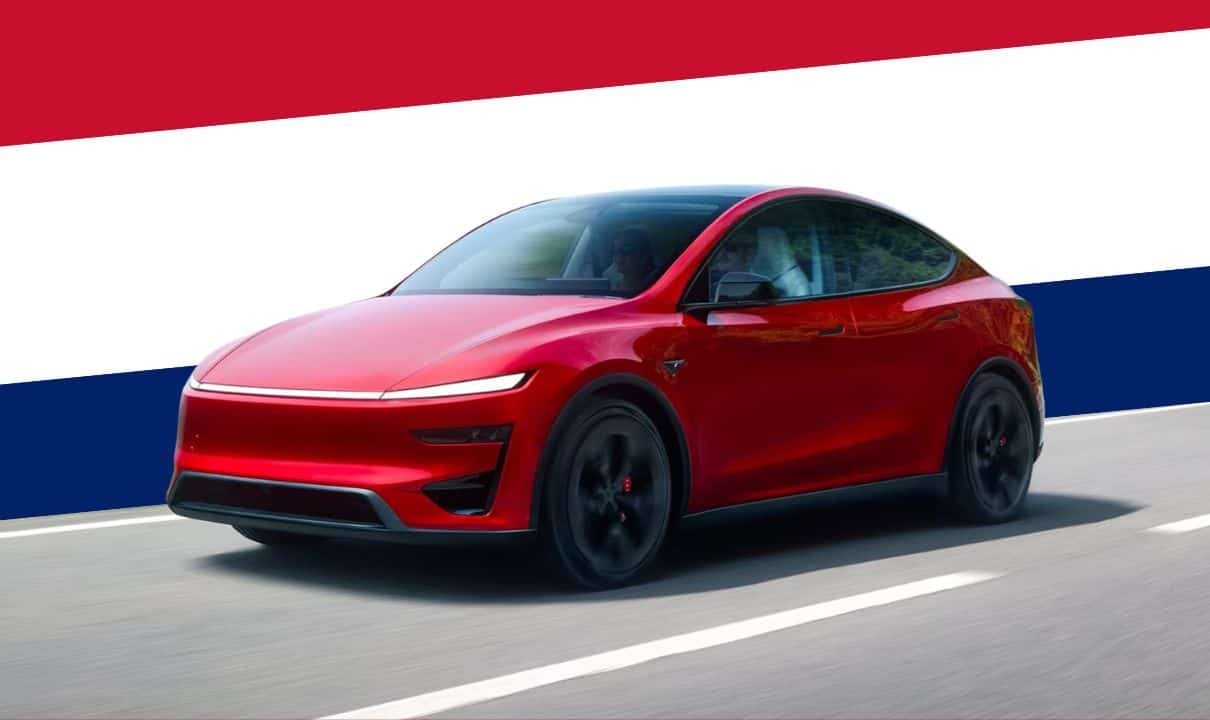

In a disruptive, contentious, and increasingly combative year, the Tesla Model Y did what it is known for — coming out on top. Yet once more, it was Europe’s best-selling fully electric vehicle in 2025, showing that momentum and brand strength can persist through rough waters.
The Model Y recorded 149,805 registrations across Europe last year, according to figures collated by JATO Dynamics and reported (Sve) on the Swedish website Allt om Elbil. That sum kept it in the top spot among battery-electric cars in the region. On paper, it seems to be shaping up as another comfortable victory. But the story behind those numbers is more nuanced.
Model Y registrations declined 28 percent from a year ago. And that was due to operational reasons, not demand. Tesla moved production in the first quarter of 2025 to begin making an updated version of the Model Y, but that transition at the factory temporarily constrained supply and led to fewer deliveries in several crucial European markets. It’s practically a given that when a high-volume vehicle undergoes a manufacturing changeover, there will be some temporary turbulence.
Aside from production struggles, Tesla faced reputational crosswinds. Elon Musk’s apparent political affiliations in the U.S. sparked backlash in certain European markets, complicating Tesla’s brand image. Leadership sentiment plays a role (at least in some markets) in prompting purchasing. But even with these headwinds, the Model Y held on to its lead.
And it did so convincingly.
More than 50,000 Model Ys were sold compared to its closest rival. The second-place finisher, a Skoda released this year called the Elroq, sold 93,870 registrations — an impressive opening, but oh so distant from Tesla’s crossover. The Tesla Model 3 ranked third, with 85,393 registrations, though its volume decreased by 24% from last year. Not too far behind was the Renault 5, whose retro styling had a strong appeal to European car buyers (85.101 registrations).
A few other models had good showings. The Volkswagen ID.4, ID.3, and the fast-rising ID. 7 all contributed to Volkswagen’s growing electric footprint. Elsewhere, the BMW iX1 and Kia EV3 are both recently introduced or significantly more widely available, leading to strong year-over-year increases.
And yet, despite Tesla winning the top individual model, the broader brand fight was mixed. Volkswagen surpassed Tesla as Europe’s largest electric vehicle maker in 2025. The German automaker sold 274,278 EVs across the region — a dramatic 56 percent year-over-year increase from 2024. Strong demand for the ID. 7 were a key part of that surge.
Tesla, on the other hand, delivered 236,357 vehicles in Europe, with sharply lower sales, resulting in a year-over-year decline of 27 percent. Applying the brakes, analysts at JATO Dynamics argue that Tesla’s relatively small and ageing model range now faces fiercer rivals than ever. Established European brands have intensified their electrification plans, while Chinese manufacturers are gaining ground in both competitive pricing and rapid technological development.
Even so, however, the larger reality is not in doubt. Supply constraints, political inside baseball, and tightening competition be damned: Model Y reigned supreme. What its commanding position makes clear, however, is a simple truth: Tesla’s best-selling crossover still has plenty of pull in Europe’s rapidly changing electric vehicle landscape.
For more information about the Tesla Model Y, please visit their official website.
👉 Please 📩SUBSCRIBE to us for more real-world EV analysis, news, and deep dives — written for EV fans by EV fans.

Hey, I’m Badal! I’m super passionate about cars—especially electric ones. Whether it’s EVs, electric trucks, bikes, or anything with a battery and wheels, I’m all in. I love writing blogs and articles that break things down for fellow enthusiasts and curious readers alike. Hope you enjoy the ride as much as I do! Enjoyed reading? You can buy me a coffee on PayPal ☕ → paypal.me/BadalBanjare