
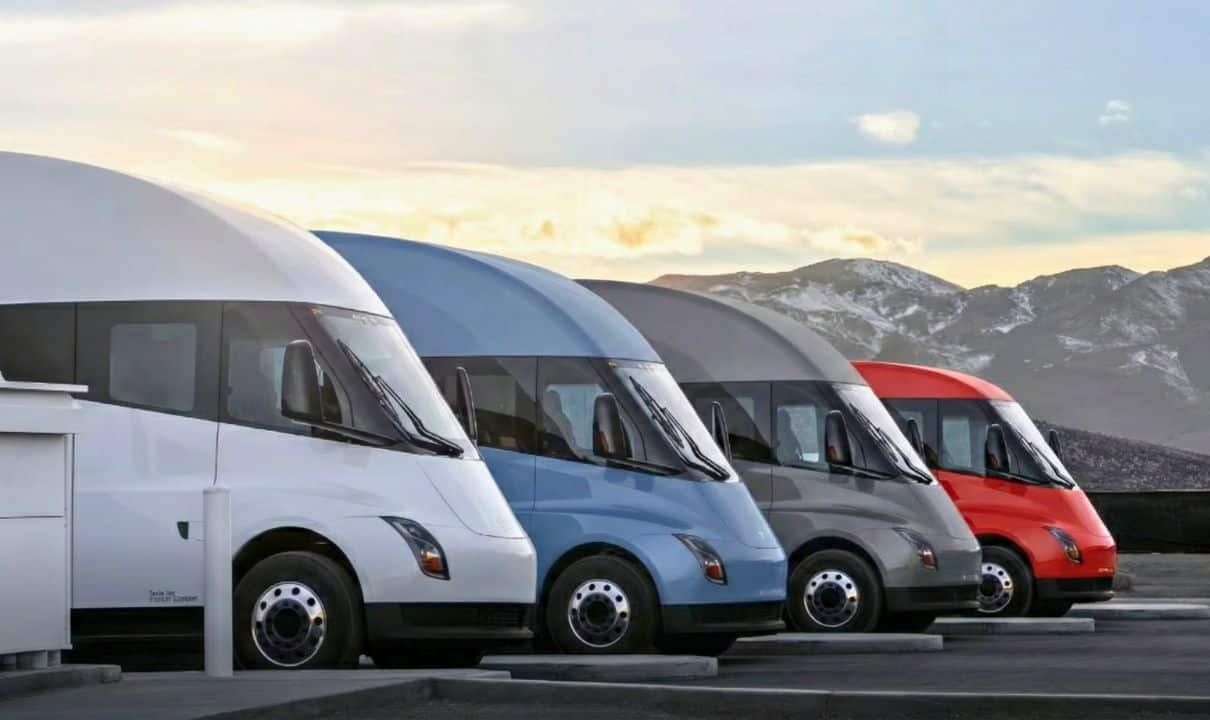

In the bright lights of a jammed convention hall in Illinois, the long-anticipated electric Tesla Semi is being seen up close for the first time. The Space Age, Class-8 truck is one of the biggest draws at this year’s Midwest Truck and Trailer Show in Peoria, and it shines big, shiny, and bright. For many attendees, it’s the first time the vehicle feels tangible rather than just theoretical.
However, beyond the show floor buzz, the Semi’s debut means so much more for Tesla and for electric trucking writ large.
After years of missed deadlines and silent test deployments, Tesla has promised to start production of the Semi sometime in the first half of this year. The timing, however, could hardly be more inauspicious. The federal government’s backing of electric vehicles has sputtered, electricity prices have spiked, and fleet operators who have rushed to electrification are crunching the numbers that once made electric heavy-duty trucks inevitable.
A Rare Public Appearance for a Delayed Truck
The Midwest Truck and Trailer Show, one of North America’s oldest trucking trade events, filled up with nearly 200 exhibitors presenting everything from futuristic powertrains to fleet software and safety tech. In that sea of chrome and diesel muscle, the Tesla Semi really does look like a fish out of water — not just for its aesthetic.
There are Tesla personnel there all weekend, talking to both industry folks and those who are just curious. But organizers say their mission is as straightforward as possible: to allow people to see the truck for themselves.

“You don’t often get a vehicle like this in front of both industry and the community at the same time,” said Matt Wells, of the Midwest Truckers Association. “This is giving people a real-world look, not just a slide deck.”
Among the product demos, fleet booths, and the perennially popular Truckers Pride Truck Beauty Contest, the Tesla Semi has fueled discussion — much of it tinged with skepticism or awe.
Production Begins as Incentives Fade
The Semi may be on display for all to see, but as of late, Tesla has been much more hesitant about how the vehicle will actually roll out. Tesla CEO Elon Musk spent a significant portion of the company’s most recent earnings call discussing Tesla’s plans for AI, robotics, and self-driving cars. The Tesla Semi hardly even warranted a mention, despite being the most ambitious vehicle launch in the company’s history.
However, Tesla said the Semi will begin production this year at a new line within its Nevada Gigafactory. A small test program in 2023 generated at least 200 units, many of which were delivered to early partners such as PepsiCo and DHL.
But many industry analysts expect volumes to be small.
“With incentives essentially hollowed out, that’s a challenging environment,” said Ann Rundle, vice president at ACT Research. Forecasts indicate sales of electric Class 8 trucks in the U.S. could still be shy of 1,400 units in 2026, a small share of the overall EV market.
That caution is echoed in Tesla’s own disclosures. In recent filings, the company surreptitiously reduced its previously disclosed annual Tesla Semi production capacity from 50,000 units to a blank.
The Economics No Longer Look So Simple
When Musk unveiled the Tesla Semi in 2017, he positioned it as a commercial disruptor. Lower maintenance. Faster acceleration. And, most importantly, a cost per mile that beats diesel thanks to cheap electricity.
At the time, the math was on Tesla’s side. Diesel was cheap, electricity even cheaper.
Now, fast-forwarding the better part of a decade, the equation has reversed. The cost of diesel has remained relatively steady, while electricity prices — especially in states like California — have shot through the stratosphere. National averages now stand at nearly 19 cents per kilowatt-hour, with some regions paying upward of 30 cents. And the increasing demand from energy-guzzling data centers has further increased the pressure.
“There are still applications where the heavy-duty EVs make sense,” said Ken Vieth, president of ACT Research. “But the climb is steeper now than it was even a year ago.”
Fleets have had no choice but to be selective in the face of that reality.
Early Adopters Stay Committed—but Cautious
DHL and PepsiCo are still some of Tesla’s most vocal Semi partners. PepsiCo operates dozens of sites in California, and DHL is looking to quickly expand its electric truck fleet as part of a broader plan to electrify 30% of its fleet by 2030.
But neither is betting that the Tesla Semi will be a silver bullet for long-haul trucking.
DHL, for its part, plans to use the truck mainly on short- and medium-distance routes while avoiding runs that extend beyond the Semi’s advertised 500-mile range. Payload also matters. Lighter freight will conserve that range; heavier cargo will deplete it rapidly.
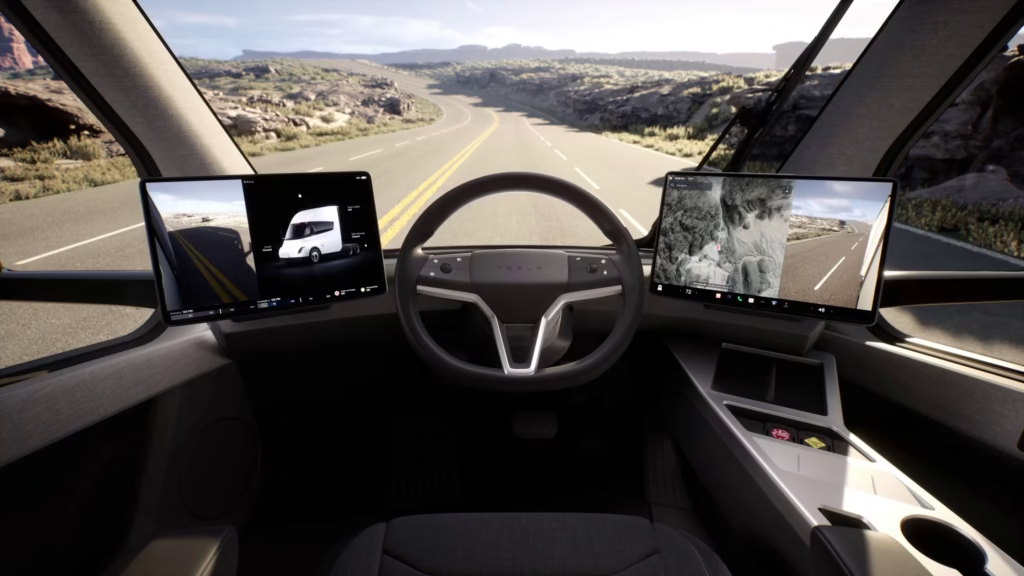
For these corporations, the Tesla Semi isn’t just about saving money. It is about emissions targets, brand commitments, and regulatory readiness — factors that don’t easily show up neatly on a balance sheet.
Smaller fleets, by contrast, are likely to hesitate. With the mysterious sticker price — likely well above early estimates — and unknown operating costs, many operators are willing to sit tight.
A Symbol of Both Progress and Pressure
Here, on the show floor in Peoria, those broader concerns take a back seat. Attendees walk the Semi, take pictures with it, and fire off questions to Tesla employees. For a moment, the truck seems like a window into trucking’s future.
But here it gets anxiety-provoking, because that future may never arrive at scale.
There’s a Tesla Semi, and it’s no longer vaporware. It’s here, it’s happening, and finally, it’s going into production. But as it takes the spotlight, it does so under greater scrutiny than ever — carrying not just cargo but also expectations that, at some point, may grow too heavy for a road that may be less open.
Read more about Tesla Semi here.
For more information about the Tesla Semi, please visit their official website.
👉 Please 📩SUBSCRIBE to us for more real-world EV analysis, news, and deep dives — written for EV fans by EV fans.

Hey, I’m Badal! I’m super passionate about cars—especially electric ones. Whether it’s EVs, electric trucks, bikes, or anything with a battery and wheels, I’m all in. I love writing blogs and articles that break things down for fellow enthusiasts and curious readers alike. Hope you enjoy the ride as much as I do! Enjoyed reading? You can buy me a coffee on PayPal ☕ → paypal.me/BadalBanjare