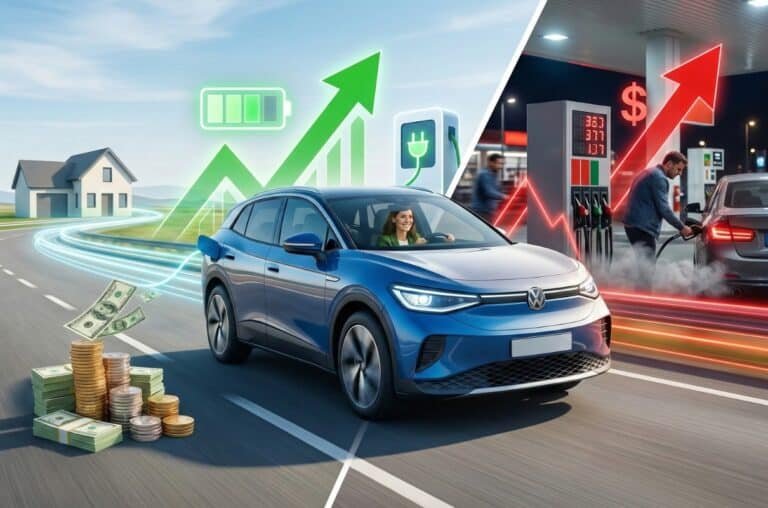
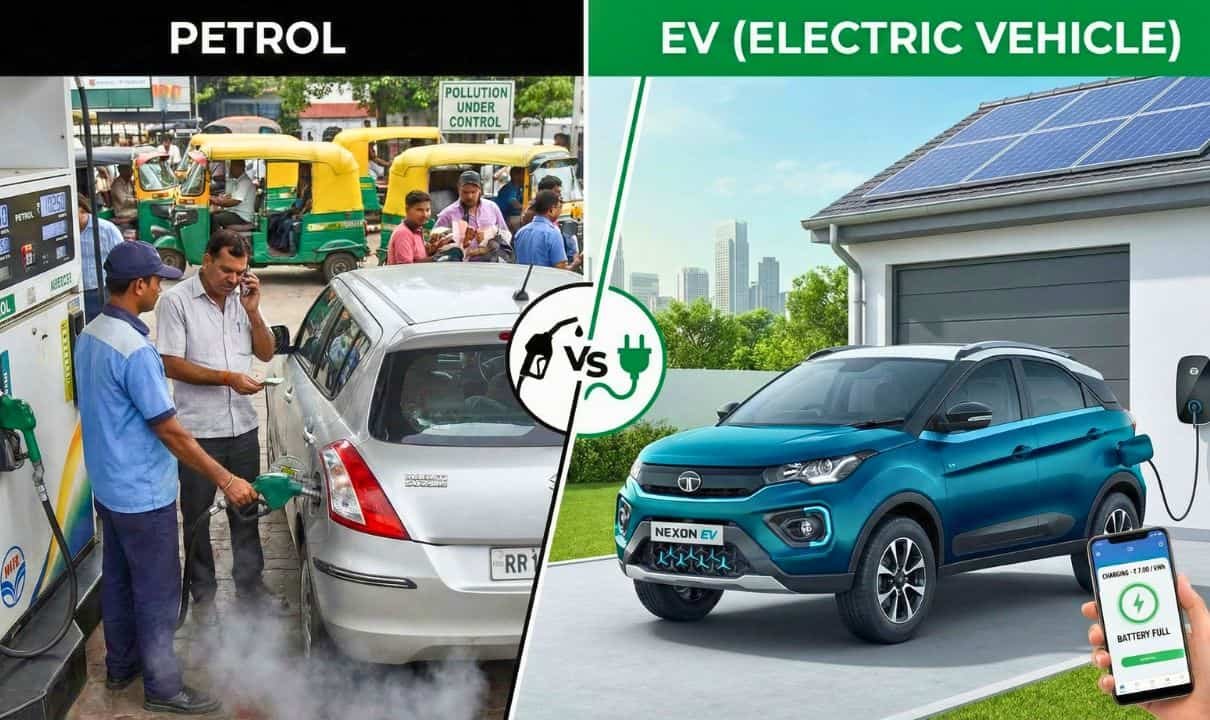

Finally, the discourse around electric vehicles in India is changing. It’s not just about range anxiety, charging stations, or futuristic dashboards anymore. The debate that matters now, today, resides in the one place you experience it most directly — your monthly bills. For comparison’s sake, when you drill down into the numbers, the fuel expense delta between a petrol car and an EV isn’t just visible. It’s eye-opening.
Let us dig through the noise and see how much it actually costs to own a petrol car compared to an EV every month in India.
Fuel vs Electricity: The Biggest Monthly Divider
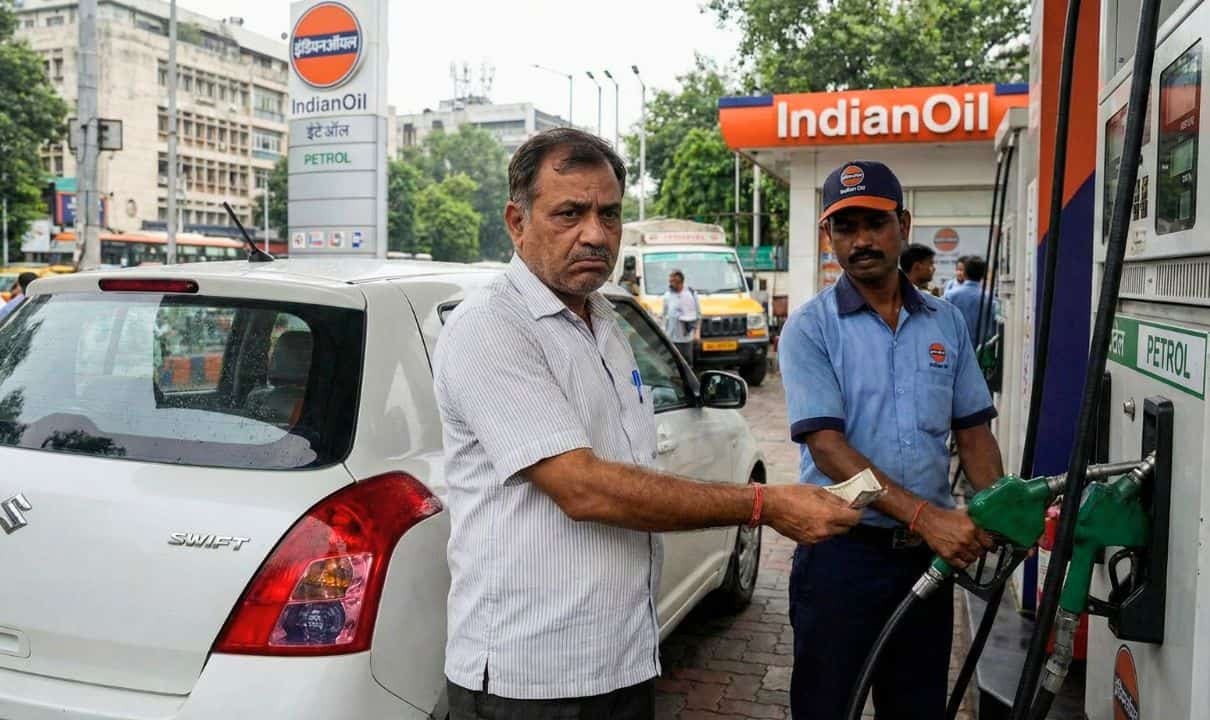
Fuel prices in India have developed a character. Here, in most large cities, petrol is still trading at around ₹100–₹110 per litre and rarely stays put for long. For a normal petrol hatchback that gets 15 km to the litre, 1,200 km car trips every month mean about 80 litres of fuel.
That’s roughly 8,000 to 8,800 rupees per month — just to keep moving.
Now shift to an electric car. The most popular EVs in India like MG Windsor EV, Nexon EV, Punch EV and Mahindra BE6 EV use 0.12-0.15 units of electricity per kilometre travelled. The same 1,200 km of road would require approximately 180 units of electricity. The monthly charging bill is in the range of ₹1,100–₹1,400, given an average residential electricity cost of ₹6–₹8 per unit.
That’s not a small difference. That’s a financial wake-up call.
Servicing Costs: Complexity vs Simplicity
Petrol cars have a lot of boxes to tick. Engine oil changes. Filters. Spark plugs. Gearbox maintenance. Exhaust systems. Servicing bills can spiral silently with even minimal neglect.
Petrol car owners spend ₹1,200–₹1,800 a month when the average annual servicing costs are divided.
Electric cars, on the other hand, are all about mechanical parsimony. No oil changes. No clutch. No exhaust. Fewer moving parts mean less to fix. Monthly servicing costs typically range from ₹300 to ₹500 and cover inspections, brake checks, and software updates.
That gap widens further over a year, more than most buyers realise.
Insurance and Registration: A Hidden EV Advantage
Insuring an electrified vehicle in India can fetch you lower premiums – typically 10–15% lower than those of their petrol counterparts. Why? Reduced engineering complexity, fewer points of failure , combined with strong government subsidies for electric mobility.
Registration charges also favour EVs. Here are some Indian states that offer full or partial road tax exemptions, reducing both the upfront and recurring vehicle ownership costs. But on average, an electric car owner also saves ₹500–₹800 more than a petrol-car owner.
It’s a subtle perk — but one that adds up.
Maintenance Surprises Petrol Owners Know Too Well
It’s a dirty secret that car manufacturers don’t want to pollute their brochures with. Clutch replacements. Timing belt issues. Fuel injector cleaning. Emission-related repairs occur as vehicles age.
Most of this is avoided entirely by EVs. Regenerative braking means brake pads last longer. There’s no gearbox wear. No engine overheating. It’s surprisingly constant in the day-to-day life of an urban car owner.
The value of predictability, financially speaking, is underrated.
The Real Monthly Cost Breakdown
Let’s now add everything up for a generic Indian city driver who covers 1,200 km each month.
Petrol Car (Monthly Average):
- Fuel: ₹8,500
- Servicing & maintenance: ₹1,500
- Insurance & misc.: ₹800
Total: ~₹10,800 per month
Electric Vehicle (Monthly Average):
- Charging: ₹1,300
- Servicing & maintenance: ₹400
- Insurance & misc.: ₹500
Total: ~₹2,200 per month
That’s a gap of almost ₹8,600 per month.
In a year, the savings amount to ₹1 lakh. Over five years, you’re looking at ₹5 lakh or more—enough to tide over the EV’s high upfront price and still save cash.
What About Charging Infrastructure?
Charging anxiety is a thing, but it’s quickly waning. Home charging covers more than 80 per cent of typical daily use for the typical EV owner. Highways, malls, office parks, and residential complexes have been blanketed with public charging networks.
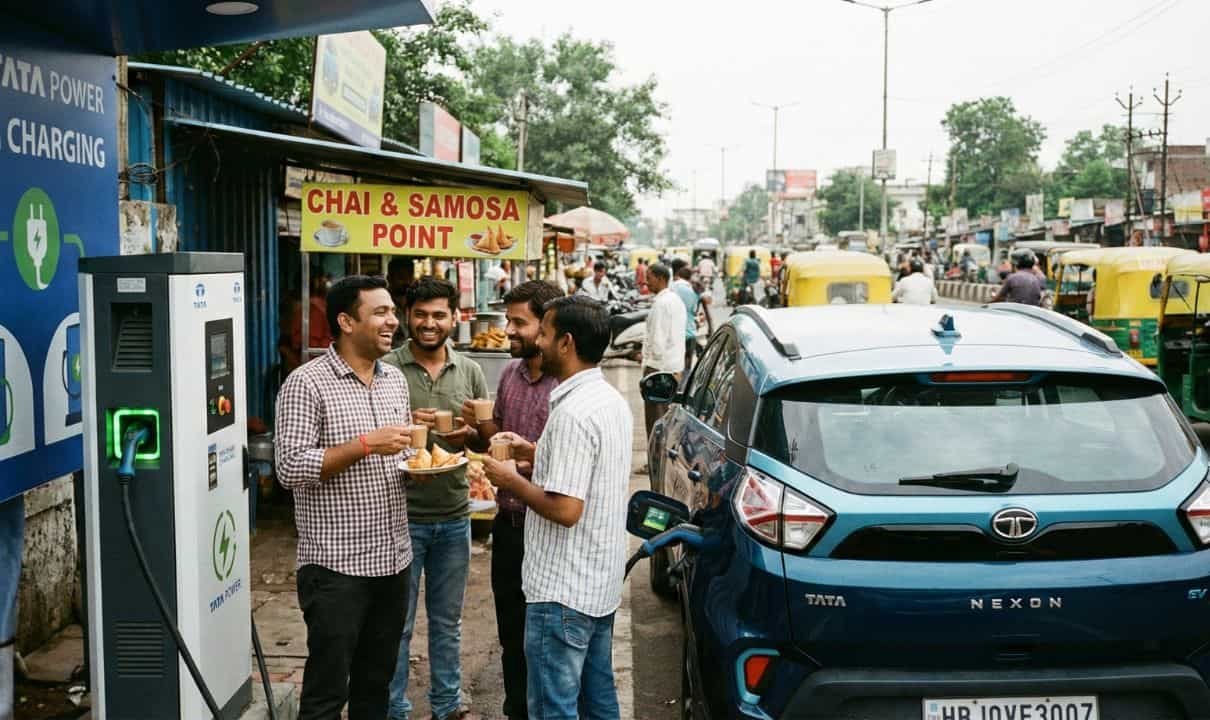
Charging for driving in cities is becoming less of an inconvenience and more of a habit.
Environmental Savings That Also Feel Personal
The monetary difference sounds amazing, but there’s another dimension to the EV equation. Electric vehicles do not emit any pollutants from their tailpipes. In heavily trafficked Indian cities, that means cleaner air, quieter streets and less heat around crowded urban centres.
It’s one of the rare lifestyle changes in which personal savings coincide with the public benefit.
The Verdict: The Math Is Hard to Ignore
Petrol cars are still viable for a few use cases — country roads, limited charging infrastructure, or specific segments. But for everyday urban driving, the numbers are no longer really in dispute.
Electric vehicles are not only cheaper to operate. They radically redefine what the catchphrase “monthly car expenses” means in India.
Once you notice the difference on paper, it’s hard to unsee it. And so more Indian buyers are shifting — not for hype or trends, but because the math finally works.
If you own an EV, please check out our EV Charging Cost Calculator to see how much you are really saving.
👉 Please 📩SUBSCRIBE to us for more real-world EV analysis, news, and deep dives — written for EV fans by EV fans.

Hey, I’m Badal! I’m super passionate about cars—especially electric ones. Whether it’s EVs, electric trucks, bikes, or anything with a battery and wheels, I’m all in. I love writing blogs and articles that break things down for fellow enthusiasts and curious readers alike. Hope you enjoy the ride as much as I do! Enjoyed reading? You can buy me a coffee on PayPal ☕ → paypal.me/BadalBanjare